

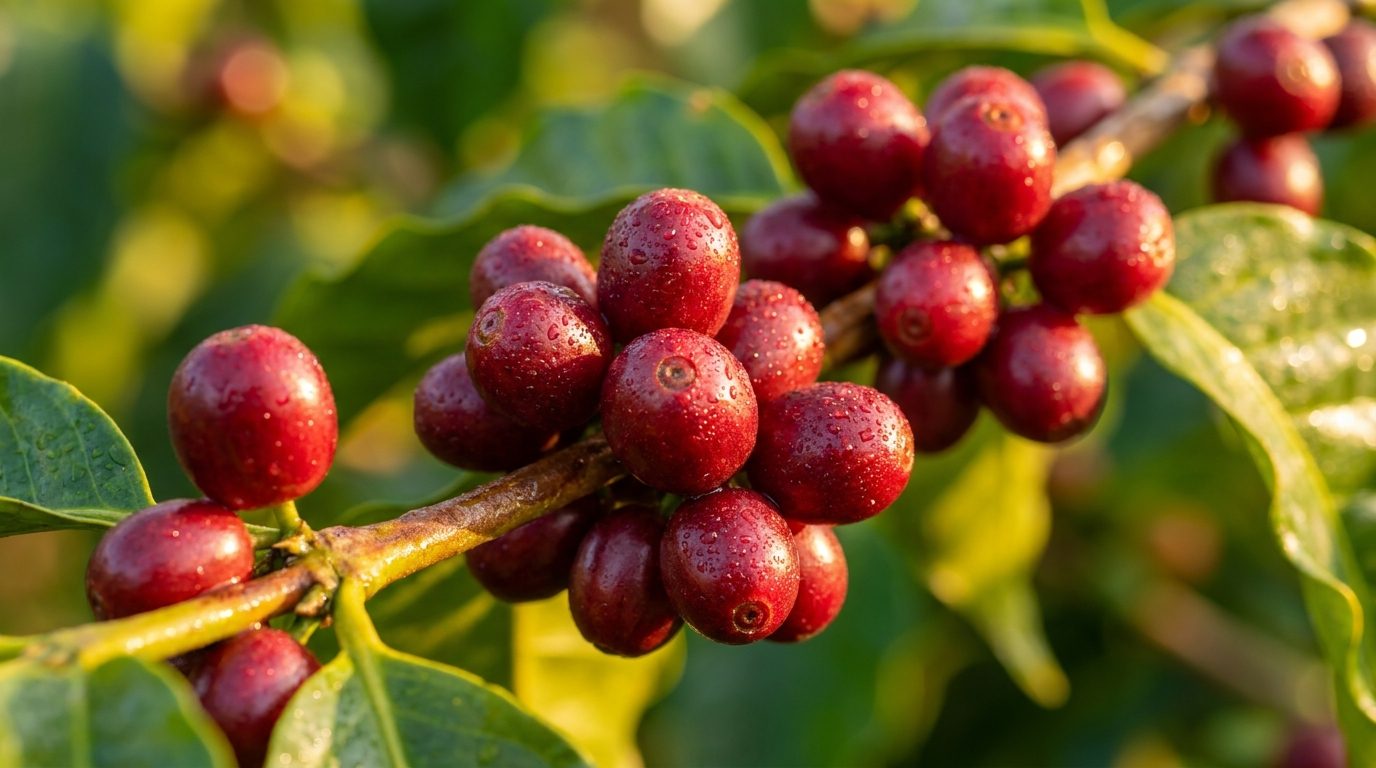
Here’s something most coffee drinkers never learn: the coffee bean is actually a seed, and it grows inside a small, bright-red fruit called the coffee cherry — also known as the coffee fruit, coffeeberry, or cascara. For most of coffee’s history, that fruit was treated as a byproduct and thrown away. The twist? It may be one of the most antioxidant-rich parts of the whole plant.
What is coffee fruit?
The coffee fruit is the cherry that surrounds the bean. It starts green and ripens to a deep red or purple, with the bean (the seed) nestled inside. During normal coffee production, the bean is removed and roasted, while the surrounding fruit is usually discarded. Brewing or eating the fruit itself — or its extract — is a relatively recent idea in the modern wellness world, even though some coffee-growing cultures have used it for centuries.
Why is it worth keeping?
Coffee fruit is naturally rich in polyphenols and antioxidants, most notably chlorogenic acid — a family of compounds (including the caffeoylquinic acids) studied for their antioxidant activity. Antioxidants help defend your cells against free radicals, the unstable molecules linked to inflammation and the wear-and-tear of aging.
What does the research suggest?
Studies on whole coffee fruit and its chlorogenic-acid compounds point to several areas of interest:
- Cellular protection. Coffee-fruit antioxidants help neutralize free radicals that drive inflammation and aging.
- Brain function. Research has explored whole coffee-fruit extract for its potential to support cognitive performance.
- Gut health. The fruit’s fiber and polyphenols have prebiotic-like properties that may support healthy gut bacteria.
- Heart health. Chlorogenic acids have been associated with healthy blood pressure and circulation.
These describe properties studied in coffee-fruit ingredients and aren’t intended to diagnose, treat, cure, or prevent any disease. Always check with a professional about your own health.
Coffee fruit vs. the bean — and caffeine
The fruit and the bean are different parts of the same plant. The fruit (cascara) contains caffeine too, but typically far less than a brewed cup of coffee from the bean. So infusing the fruit adds antioxidant character without piling on caffeine.
Why ycofy brews with the whole coffee fruit
This is the heart of the ycofy difference. Instead of treating the cherry as waste, we infuse our coffee with whole coffee-fruit extract — so the antioxidant benefit comes from the coffee itself, not a lab-made additive. It’s the same idea behind our name and our promise: coffee, reimagined from the bean up. The result tastes like great coffee, because it is great coffee — just made to do more.
Frequently asked questions
Is coffee fruit the same as cascara?
Essentially, yes. “Cascara” (Spanish for husk) usually refers to the dried coffee-cherry fruit, which is the same coffee fruit that surrounds the bean.
Does coffee fruit have caffeine?
It contains some caffeine, but typically much less than a regular cup of brewed coffee.
What are the main antioxidants in coffee fruit?
Chlorogenic acid compounds (including caffeoylquinic acids) and other polyphenols, which are studied for their antioxidant activity.
Is coffee fruit safe to consume?
Coffee fruit and its extract are consumed in foods, teas, and supplements. As with anything new, start moderately and check with a professional if you have specific health concerns.
Share:
Low-Acid Coffee for Sensitive Stomachs: How to Enjoy Coffee Again
What Makes a Coffee “Functional” - and How to Choose the Healthiest Cup